
Céu created NUPA in 2009 and directed it until its end in 2012. NUPA was a center, in São Paulo city, for the fostering of Brazilian animation film production, and a free-school studio to provide opportunity to students without money to become animation professionals.
Comments from Céu:
At NUPA* I had a small school studio, where students without money could learn, for free, the basic fundaments and tools of “2D animation” (which I prefer to distinguish between “hand-drawn animation” and “digital cut-out animation”) and, in addition, to receive lectures from the best professionals in town. I also developed classes in different aspects of animation film content and animation as an art form. Humor and Comedy, the Creation Process, WB directors, UPA revolution and its influences and consequences, Russian Animation, the works of Osamu Tezuka, Hayao Miyazaki, Ward Kimball, Norman McLaren and Ralph Bakshi, were among the subjects we developed in classes, films projections and discussions.
*NUPA: Núcleo Paulistano de Animação (São Paulo´s Animation Center)
But the main goal of NUPA was to apply the ethical principles for which I received the HOPES environmental award in 1996, as well as to foster Brazilian animation film production. In this case, I had in mind to stimulate the production of films that would promote both environmental awareness and genuine and positive affection of the city, its history, culture and its inhabitants. In a step further, to also give voices to those without, i.e. discuss, in a sympathetic way, the problems of those with less means. For example, the Recycled Waste Collector´s sketch, in the Animated Kabaret.
With the Paulicéia film series, we divided production development into three phases:
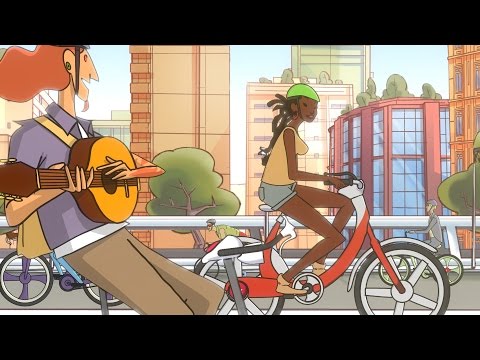
In Phase 1, a public scriptwriting competition, focusing on a specific theme, was open to all São Paulo citizens, with a cash prize awarded to the chosen candidate. This encouraged São Paulo residents to learn more about their own city and discuss issues such as the pollution of São Paulo’s rivers, the benefits of bicycle transportation, the artistic contributions of writer Mário de Andrade, and more.
In Phase 2, the chosen script would be visually developed and even refined in a Pre-Production Workshop, with the participation of NUPA students, under the supervision of a guest animation art director. The final products of this phase were a complete storyboard, a character and prop design project, and some color layouts.
Phase 3 was the production of the film itself, hiring the best artists in São Paulo to work together in a collaborative manner, with the participation of our students, whenever possible.
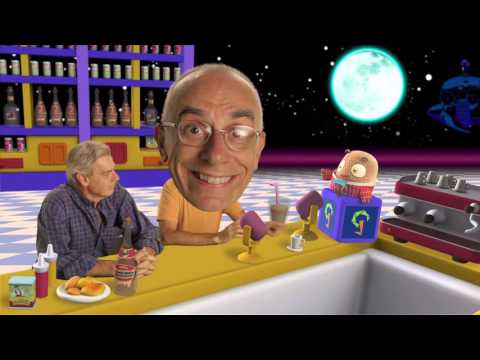
On “Animated Kabaret,” which was developed to become the pilot for a future series, I served as showrunner. The goal of this pilot was to create a type of animated program that could integrate completely different styles, as an opportunity to give the participating artists as much freedom as possible. And, as with all NUPA films, to develop content related to São Paulo’s socio-environmental issues.
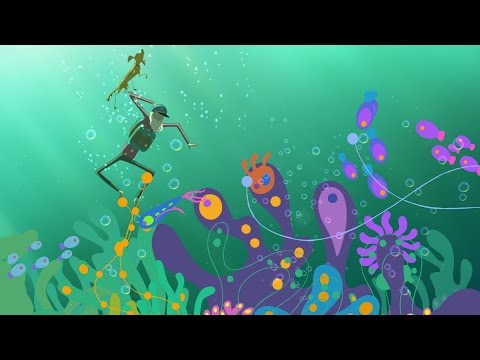
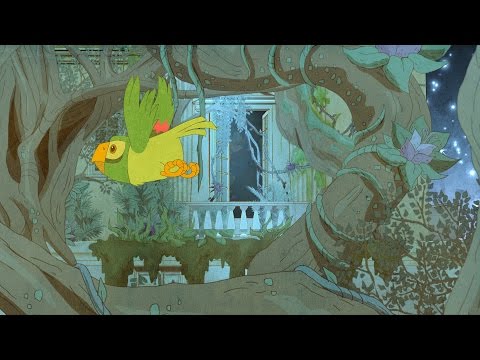
“Expansion,” for the musical group O Jardim das Horas, from Fortaleza, Brazil, was created based on learning exercises by NUPA students. However, some of the animation was created specifically for this video, inspired by the song’s lyrics and synchronized with its rhythm. It’s easy to see that some of the drawings are by beginners, but I used this to benefit the film’s art direction, as explained below.
The lyrics speak of “Something different is coming,” a new Time, and something we need to understand about it. I associated this message with the students’ spontaneity and their disregard for the canons of animation, taking Dadaism as the basic reference to art direction. Furthermore, since this film was necessarily a “collage” of mismatched and contrasting images and scenes, and since collage is a typical artistic concept of early Modernism, the History of Modern Art became the reference for everything in this film. If the viewer knows anything about Modern Art, they will easily identify with the references. For example, the scene with the musicians on the terrace of the Copan (a famous modern building in São Paulo), with the singer Laya, nude, sitting next to the other two musicians, Raphael and Carlos Gadelha, pays homage to Édouard Manet’s painting “Le Déjeuner sur l’Herbe.” This canvas is not only the most borrowed composition of all time, but it is also considered by many scholars to be the first Modern Painting in history.
I made the musical film “Expansion” with all this in mind, also so I could use it again in NUPA art classes. Furthermore, I experimented with my own elaboration, exploring the gaps and connections between Modern Art and Animation. My work on this film, as director, was primarily to create all the compositions and fine-tune them, integrating them with the music. I also created some animations myself, or worked closely with some of the more advanced students, to improve the quality of their contributions. It’s also worth noting that many of the set elements and props, representing the architecture and urban landscape of the city of São Paulo, were created for this film by illustrator and cartoonist Orlando Pedroso.
NUPA received support from the São Paulo Municipal Department of Culture and was housed in the Ruth Cardoso Youth Cultural Center. NUPA’s objectives were achieved with considerable success, including film production, the application of HOPE principles, and the graduation of students. However, with the mayor’s replacement and political interests, NUPA unfortunately ceased to exist in 2012.
Céu D’Ellia
