Digital Exercise

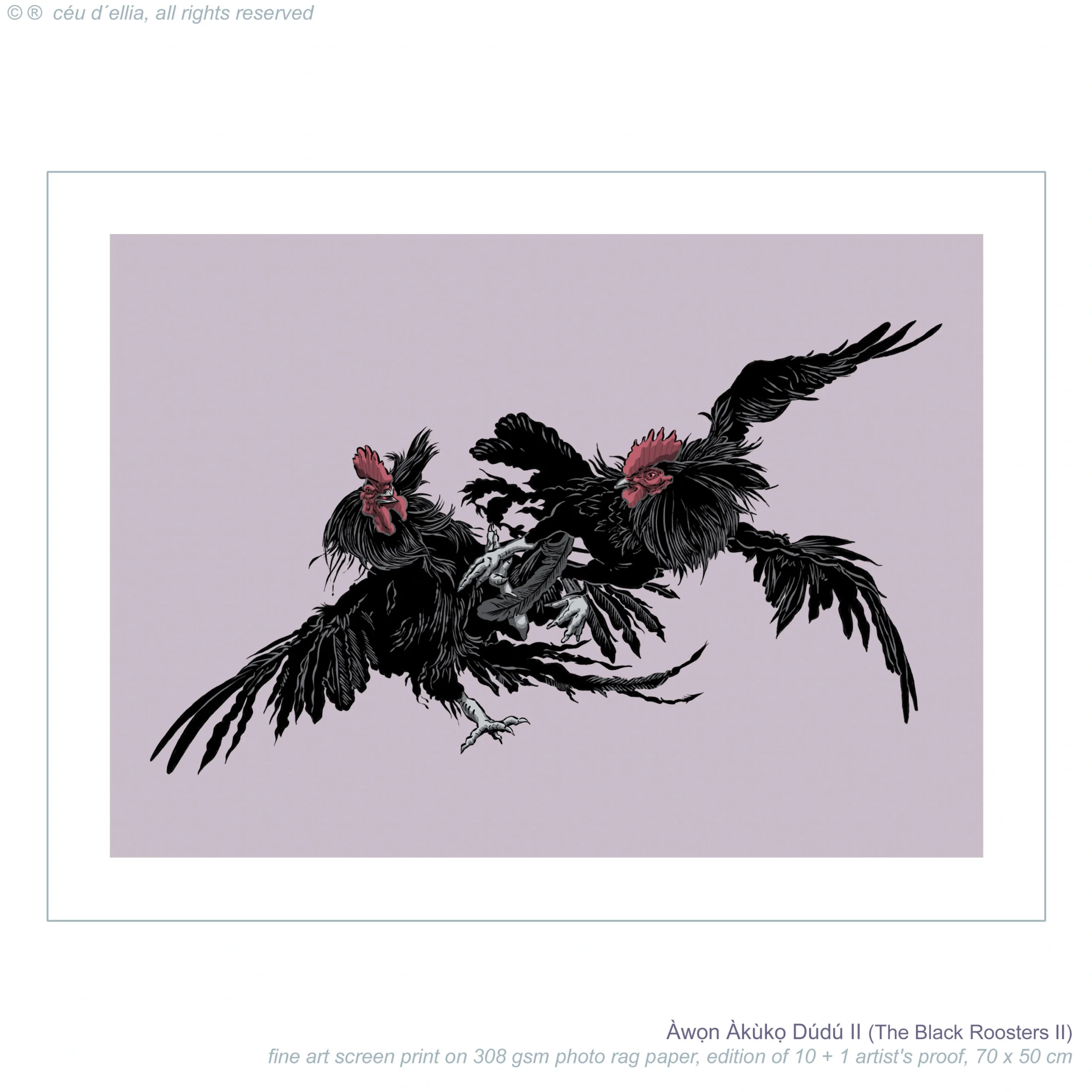
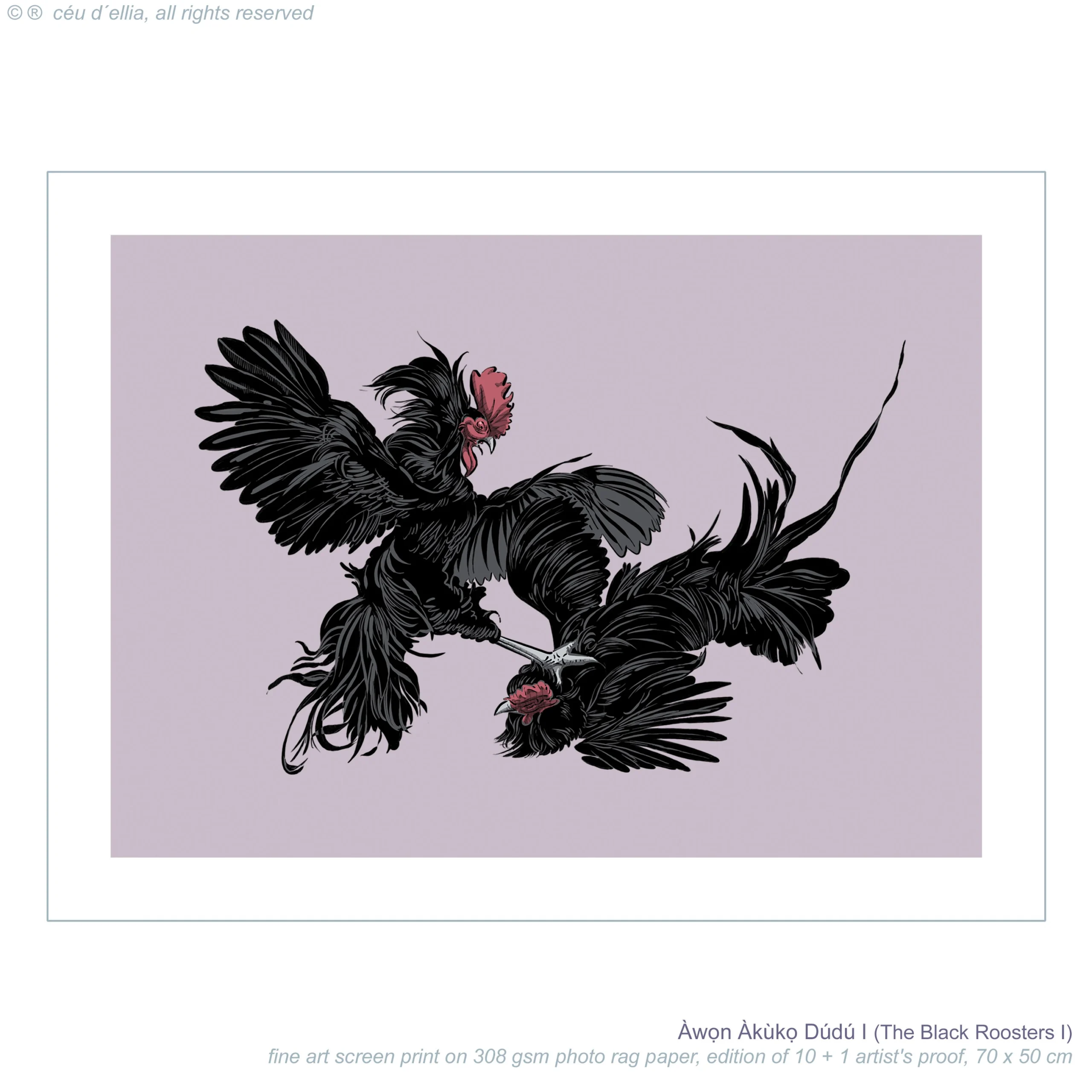
These are Céu’s first drawings, created entirely digitally, working with Cintiq and Photoshop, from sketch to final art. They are also a graphic study of an African Yoruba mythological theme, the Orisha Eshu, who controls passages, paths, and crossroads. He is a deity to whom roosters, especially black ones, are offered, and who can also influence the way beings interact.

800_Eshu-Yoruba-&-Roosters_blog

Comments from Céu:

I made these drawings during my first week working digitally. The first few hours were quite tedious, as I patiently adjusted my hand and brain to the weight of the pen while drawing countless freehand circles. After a night’s sleep, my gray matter adjusted, and I began the exercises you see in this post.

800_Exercising-Cintiq-03
800_Exercising-Cintiq-detail-02
What I like most about digital is that you can draw, in the same file, with very different relative view sizes. So, I can draw, as a base layer, a very loose, small sketch, focusing only on the best lines of action and balance.
Exercise-02

Then, I can adjust the view size, create a second layer, and drop the first pencil directly over the first sketch. Typically, to do this on paper, I would draw a very small thumbnail sketch. Then, I would have to enlarge it on a printout, using a photocopier or scanner. It took so much time that, even though the results were always very good, I used this method only for illustrations. For animation or comic pages, I would draw small sketches on a separate sheet, just as a quick study. Because of all the time you must spend on the enlargement and transfer phase. But it’s not the same as when you can draw directly over your looser, freer sketch, as I can do now, with any work.

800_Exercising-Cintiq-02_blog

Exercise-01

In addition to the tools and skills, I also completed these exercises to create this Yoruba Eshu panel. It’s a graphic study of an African Yoruba mythological theme, the Orisha Eshu, who controls passages, paths, and crossroads. He’s a deity to whom roosters, especially black ones, are offered, and who can also influence the way beings relate to one another.

Eshu-development

I enjoy developing my own take on myths, blending traditional elements with unorthodox ones. It’s a way to enlighten myself about archetypes and how they move in the shadows of our limited human perception.

Of all the Yoruba Orishas, ​​Eshu is the most controversial. This is because, during colonial times, everything outside of mainstream Christian culture had been filtered through their standard Manichaean vision. Eshu was mistakenly considered a kind of devil or demon. In fact, he represents the intermediary, the arbiter, between what one desires to achieve and the different possibilities that reality can generate. Eshu can also be understood as the Trickster, the deity, full of secret knowledge, who skillfully breaks the rules to achieve positive effects (or at least what he desires). He is Reynard the Fox of European fables, or Coyote of some Native American cultures, Br´er Rabbit of African American folklore, Loki of Norse mythology, among others.

800_Eshu-Yoruba-&-Roosters-detail

I also like to draw all kinds of animals. I love them all. Now it’s time for the rooster.

800_Exercising-Cintiq-05800_Exercising-Cintiq-detail-01

SHARE: